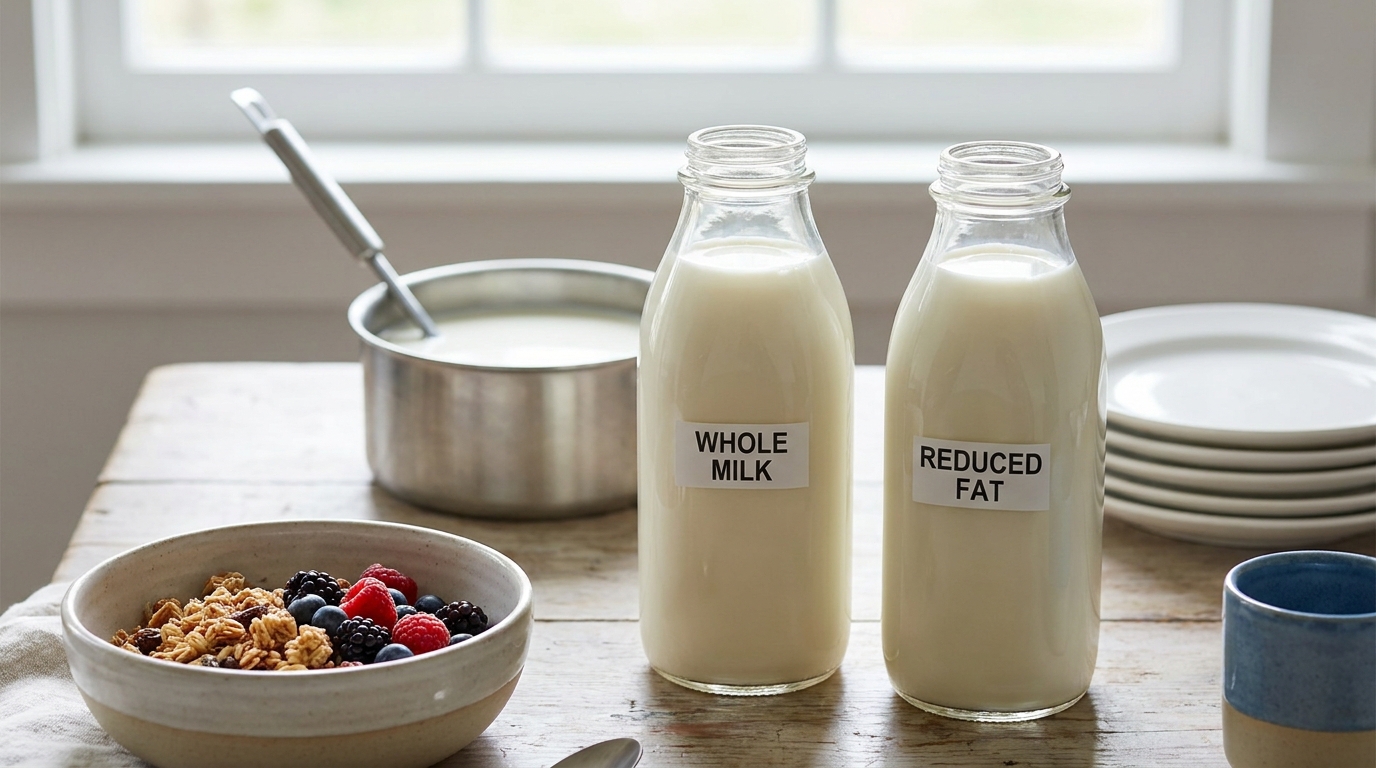
On May 8, 2026, the U.S. Department of Agriculture (USDA) announced the finalization of a rule to reintroduce whole milk and reduced-fat (2%) milk into federal child nutrition programs. This action follows the Whole Milk for Healthy Kids Act of 2023, signed into law by President Trump, which mandated the restoration of these milk options in schools. Previously, federal regulations limited milk offerings in these programs primarily to fat-free and low-fat (1%) varieties.
This policy shift aims to provide greater flexibility for schools and families, acknowledging evolving nutritional science and consumer preferences. The USDA stated that the reintroduction allows schools to offer a wider range of milk choices, potentially increasing milk consumption among students. Milk provides essential nutrients such as calcium, vitamin D, and potassium, which are crucial for child development and bone health. For instance, 365 Everyday Value Strawberry Whole Milk Organic Yogurt, which scores 39/100 on FoodScore, contains dairy that contributes to these nutrient intakes.
Nutritional Considerations and Dairy Support
The decision to include whole and 2% milk reflects a reevaluation of dietary fat recommendations for children. While previous guidelines emphasized lower fat intake, current research often highlights the importance of healthy fats for satiety and nutrient absorption. The USDA's move also aims to provide additional support to the dairy industry, which has advocated for the return of whole milk to school programs. This change is anticipated to benefit dairy farmers by increasing demand for their products within a significant market segment.
The implementation of this act ensures that schools participating in programs like the National School Lunch Program and School Breakfast Program can now offer whole and 2% milk alongside existing fat-free and 1% options. This provides more dietary choices for students and allows schools to better cater to diverse student preferences, while still adhering to overall nutritional standards for school meals. The USDA emphasized that all milk offered must remain fluid milk and meet federal safety and quality standards.